|
Click on the
thumbnail to maximize the image |
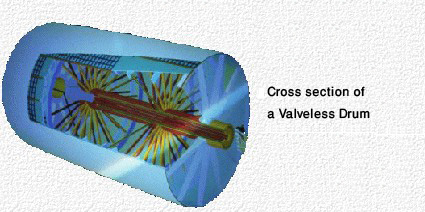
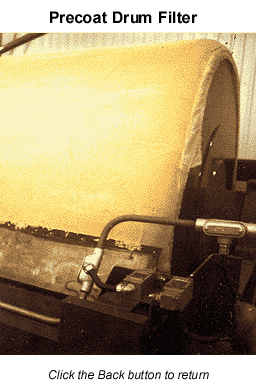
The Rotary Drum Precoat Filter is used to polish solutions having traces of contaminating insolubles. To polish the solution the drum deck is precoated with a medium of a known permeability and particle size that retains the fines and produces a clear filtrate.
The following materials are used to form the precoat bed:
These materials when related to precoating are wrongly called filter-aids since they do not aid filtration but serve as a filter medium in an analogy to the filter cloth on a conventional drum filter.
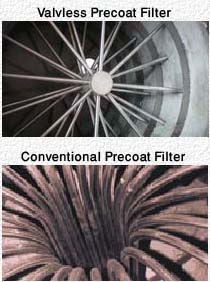
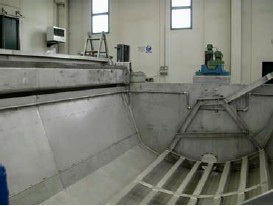
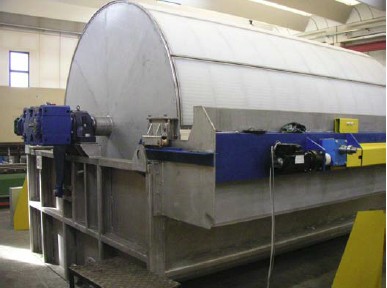
The Precoat Filter is similar in appearance to a conventional Drum Filter but its construction is very different:
|
|
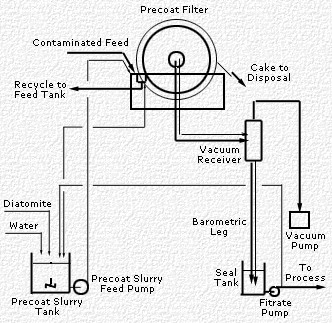
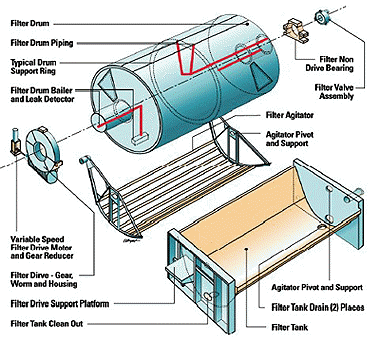
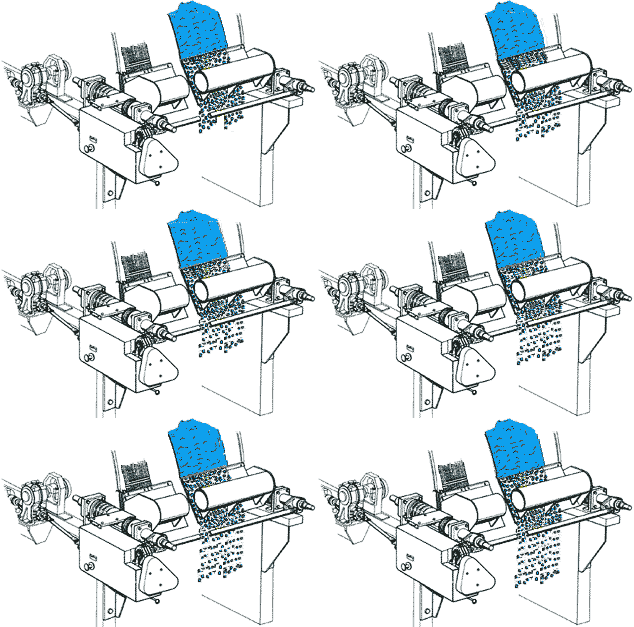
A typical flow scheme of a Precoat Filter Station The main components of a Precoat Filter
|
|
|
|
|
|
|
|
|
 |
|
 |
 |
The Startup Procedure
To startup a valveless filter there is one major requirement:
To allow very fast drum speed that will pick up a thin layer of diatomite or perlite in the first minute of the precoating stage. Once a vacuum is created the speed can be reduced gradually to form a dense and compact precoat bed.
Precoat filters are generally used in the following cases:
The operation of a precoat filter is done in two stages:
The two stages are closely related since the efficient and economical performance of the filter in the polishing stage depends entirely on the selection of a suitable filter aid and the care taken during the precoating stage.
A 2-5% precoat slurry is prepared by feeding the selected filter aid to a tank filled with water and equipped with a low speed mixer, such as a sweep-arm agitator, that rotates at 30-50 rpm. The low speed is necessary in order to avoid the breakage of the fine skeletal or expanded rock structure.
A precoat cake, depending on its permeability, may contain about 50% moisture so it is sometime advisable to prepare the slurry with polished filtrate rather than with water. Two arguments exist in favor of the filtrate option:
The amount of dry diatomite in the wet cake is 310 Kg/m3 (for coarse diatomite) and 370 Kg/m3 (for fine diatomite) so, if we assume a 150 mm precoat then it may contain some 50 Kg/m2 water. Therefore, on a middle sized filter of 20 m2 the amount of water for downstream evaporation is 1 ton and this must be taken in consideration.
With filtrate the transition from precoating to polishing does not necessitate the emptying of the tank whilst with water the tank must be drained in order not to dilute the solution.
When the alternative to water is preferred attention must be given to the specific gravity of the filtrate since difficulty may arise while attempting to wet and mix the light filter aid in a solution of say 52% CaBr2 having a specific gravity of 1.7. In such a case the solution of using a high speed mixer is not desirable since, as mentioned above, particle breakage may occur so using an eductor to enhance wetting is a better method .
There are some basic rules to observe during the precoating of the drum in order to ensure that the filter aid is evenly distributed and the formed bed is tight and crack free:
When precoating commences the cake resistance is low therefore the vacuum pump should be capable to deliver a very high air flow and in some installations a separate vacuum pump is dedicated just for the precoating stage.
The precoat filtrate pump should be capable of pumping the slurry at a pipe velocity of 1.5-2.0 m/sec to avoid segregation and the settling of the heavier filter aid particles.
For the same reason the drum should be rotated at a high speed.
The weir in the overflow box should be lowered so that the drum is barely submerged and the bed does not form too fast. A fast forming precoat is generally uneven in thickness and requires substantial "shaving" prior to feeding the contaminated solution in the polishing stage. Likewise, a precoat that forms too fast tends to crack so filtrate clarity may deteriorate and the cloth under such cracks may blind.
The doctor blade must be retracted to the maximum clearance between drum deck and agitator and then advanced slowly to smoothen the bed's surface in preparation for the polishing stage.
Vacuum should never be cut-off during precoating (or polishing for that matter) since the heavy cake will most certainly fall off the drum into the tank with all the consequences. A rule of thumb suggests that to hold a 100 mm wet precoat to the drum a vacuum of 180-200 mmHg is required.
The filter cloth acts merely as a support for the precoat that forms when precoating commences and then the already formed thin layer takes over. Therefore, the cloth should be sufficiently dense to retain the forming bed depending to a large extent on the particle distribution of the selected filter aid.
Polishing
The insoluble contaminants, which are often slimy and gelatinous in nature, cause fast media blinding and soon reduce filtrate rate to a trickle. Hence, the operating principle of polishing is to avoid formation of a thick layer but rather form a very thin layer that is removed continuously by shaving it off.
This requires careful optimization since polishing is an expensive operation. The optimum conditions are:
All the points mentioned in the section related to conventional D:\Application Data\Downloads\valvless internal piping.jpg also apply to Precoat Filters but some additional requirements should be observed:
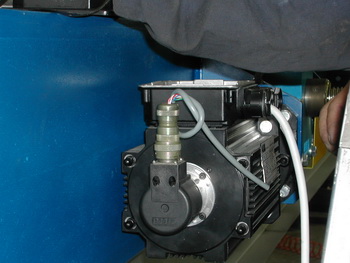
Diatomaceous earth or perlite are abrasive materials and the Doctor Blade's edge must be kept sharp otherwise the cut is not smooth and vibrations to the fine discharge mechanism may be experienced. A ground and polished seam of stellite is often welded along the edge to prolong the life of the blade.
Good practice is to manufacture the blade from short segments since practice shows that the wear is not equal across the drum's face. Preferably, these segments should be manufactured with two sharp edges so that when one edge wears out it may be turned 180 degrees thus doubling the time required for replacement.
The moving parts of a rake type reciprocating agitator have many bearings that once they wear out the entire filter is subjected to shocks and shakes. This situation is dangerous since during the precoating stage the vacuum is relatively low and the forming bed may drop-off so special precautions should be taken to inspect the bearings as part of the preventive maintenance schedule.